Poster: Promotional image via Wikipedia (The_Grand_Budapest_Hotel.png). Click the source for the file page, author, and license notes. Source. License: Typically fair use (promotional artwork).
Movie · 2014
Filmed in GörlitzThe hotel lobby is a real department store in Görlitz, Germany.
Where to watchFull story — spoilers ahead.
The story is a nest of narrators. A young writer meets an old man named Zero Moustafa in a fading mountain hotel. Zero owns the place and looks like someone who won a war and lost the reason. He tells the writer about 1932, when the Grand Budapest was pink, busy, and run by Monsieur Gustave H., a concierge who treated hospitality like a religion and romance like part of the service.
Gustave is precise, vain, and kinder than his perfume suggests. He educates Zero, then a newly hired lobby boy with no papers and a lot of nerve, in the arts of timing, discretion, and never letting a guest see you panic. Madame D., an elderly aristocrat and one of Gustave’s many companions, dies under suspicious circumstances and leaves him a painting, Boy with Apple. Her son Dmitri, a fascist in a good coat, wants the painting and wants Gustave ruined. A butler is murdered. Gustave is arrested because the family needs a thief.
Prison does not improve his manners. He organizes an escape with convicts who are more practical than the justice system, using tools smuggled in pastry by Agatha, the baker Zero loves. The breakout is comic and bloody in the way the film always is: slapstick on top, a knife underneath. Once outside, Gustave and Zero chase the painting, a copied will, and the truth about Madame D. through a Europe that is starting to put soldiers on trains.
The plot is a caper. The feeling is an elegy. A secret police force called the ZZ is replacing the old manners with boots. Deputy Kovacs, the family lawyer, tries to do his job and is murdered for it. Agatha is braver than the men who think they are protecting her. Zero and Gustave become father and son without ever using the words. They recover the painting. They recover the fortune. They do not recover the century.
Agatha does not survive the century either, at least not as the girl from the bakery window. The will, the painting, and the hotel become Zero’s inheritance, which is another way of saying he is left to remember everyone. He keeps the Grand Budapest open as a shrine long after the guests have chosen uglier, more modern rooms.
Gustave dies the way a man like him would: intervening when soldiers insult Zero, still believing courtesy might shame a gun. Zero inherits the hotel and the money and spends the rest of his life keeping a monument to a world that no longer books rooms.
The Grand Budapest Hotel is about civilization as a performance that still matters even when it fails. Gustave’s rules cannot stop a war. They can make a lobby boy into a person who remembers that dignity is a choice. The pink hotel, the pastry box, the stolen painting — all of it is memory trying to stay painted while history scrapes the walls.

1 of 4
Görlitz, Germany
The department-store atrium becomes the hotel lobby.
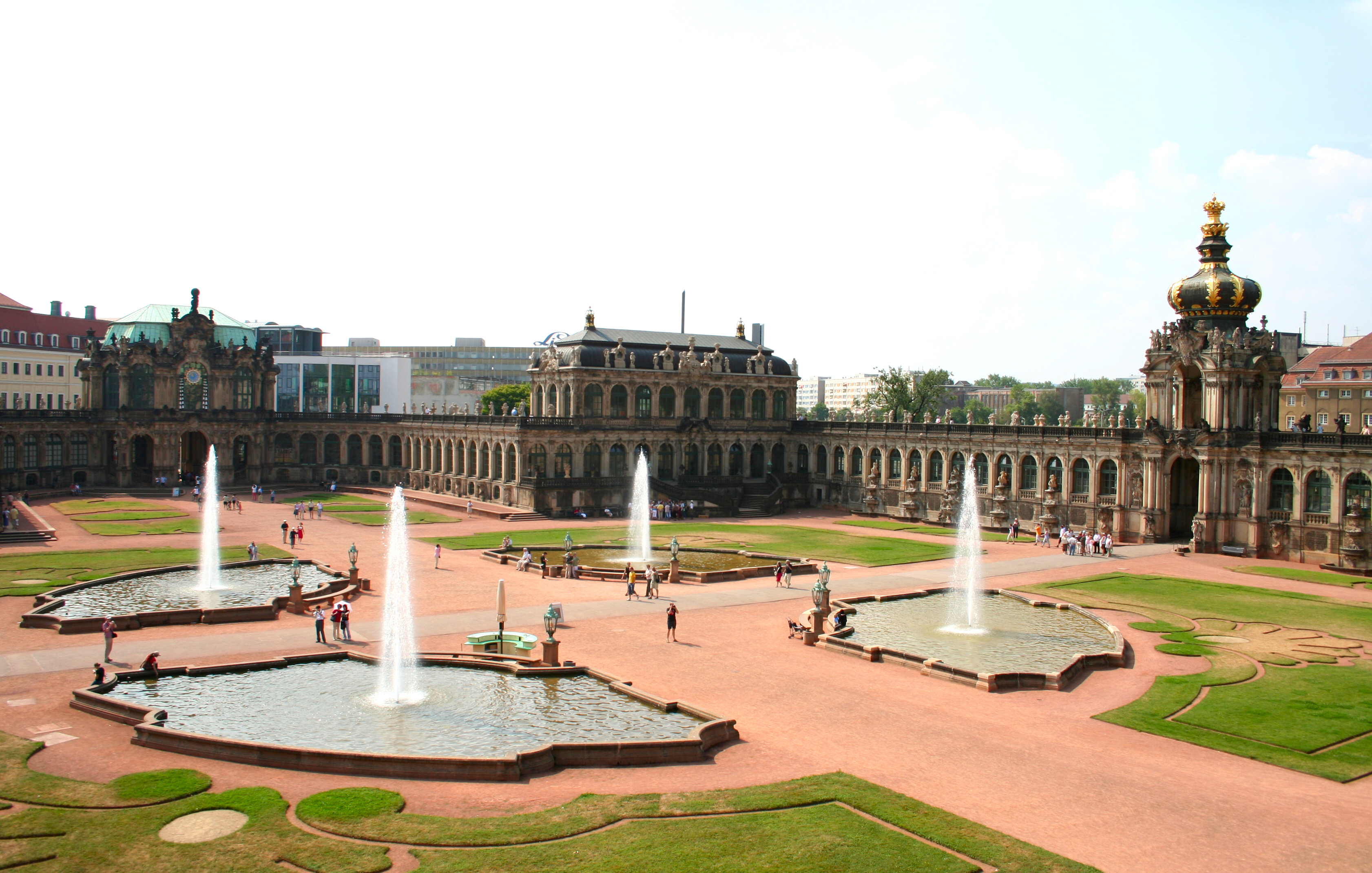
2 of 4
Dresden, Germany
Baroque courtyards in the invented republic.

3 of 4
Görlitz, Germany
The town square around the hotel.
4 of 4
Görlitz, Germany
Civic rooms in the invented republic.
Official trailer